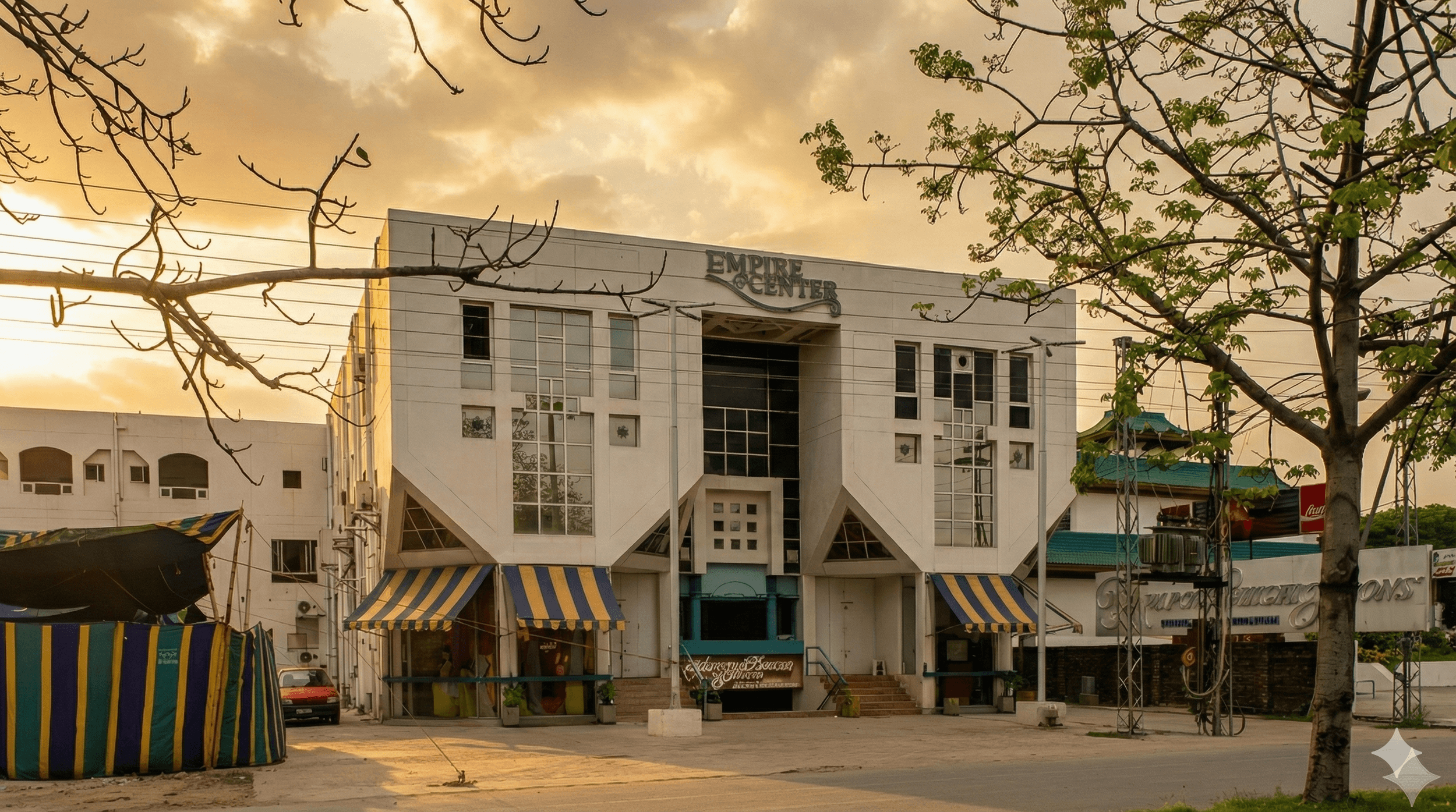
Empire Center
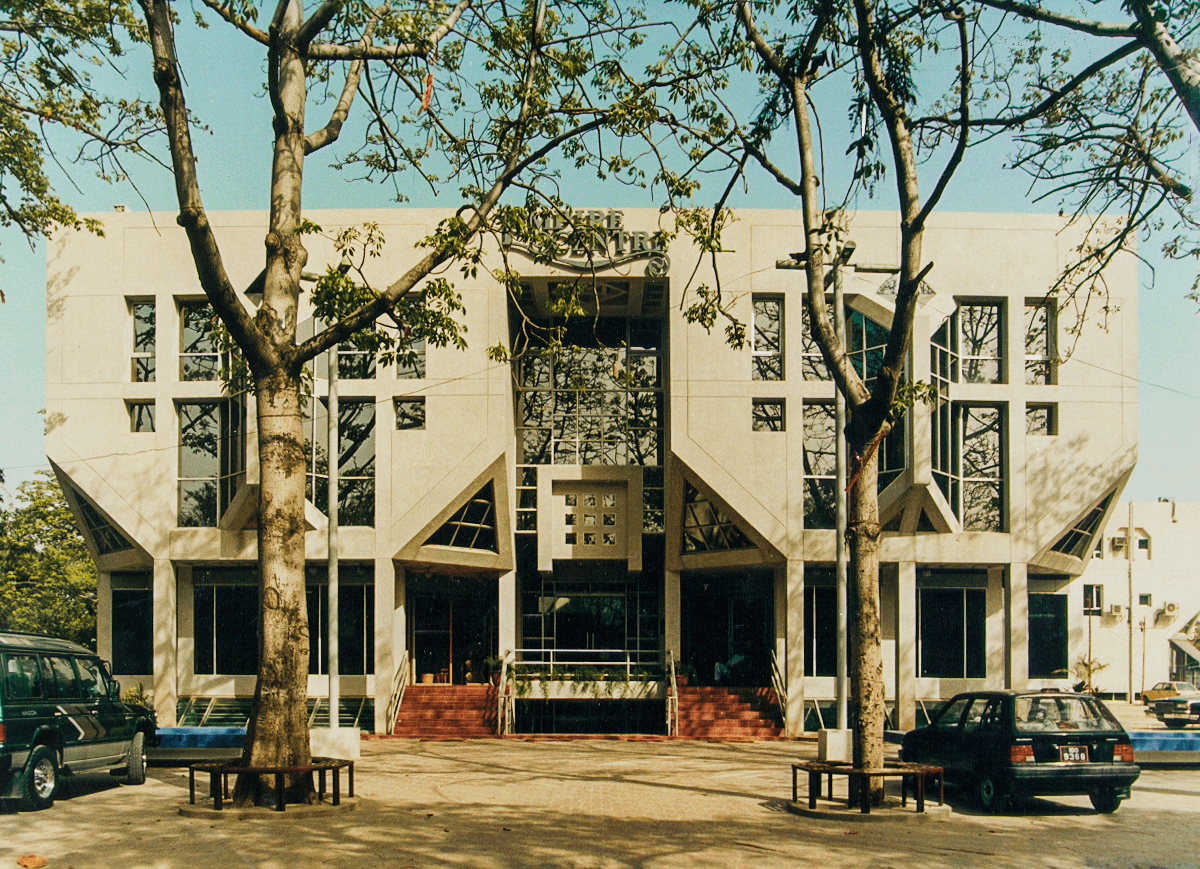
Located on Lahore's Main Boulevard, Empire Centre marked a pivotal moment in the city's commercial evolution. Designed at a time when retail development in Lahore was still nascent, the project stands out as one of the earliest inward-facing malls in the city — signaling a shift from linear storefronts toward a more immersive, climate-controlled shopping experience. It was also the first commercial project by Rafi Group, a real estate developer that would later go on to reshape significant parts of the city's urban fabric.
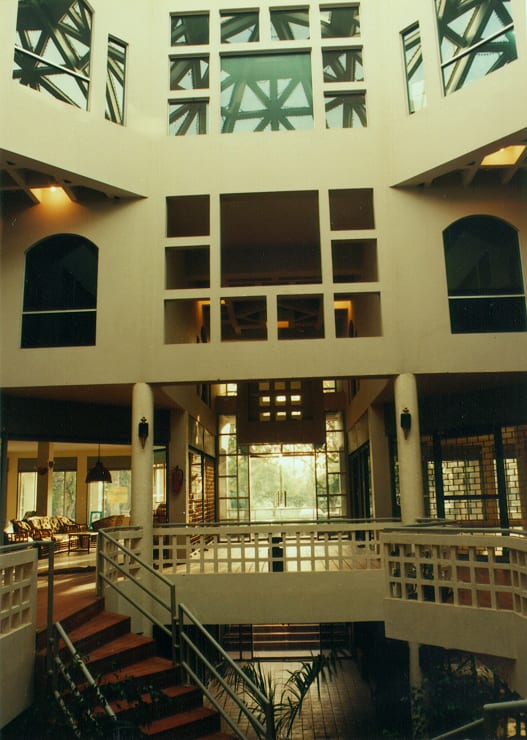
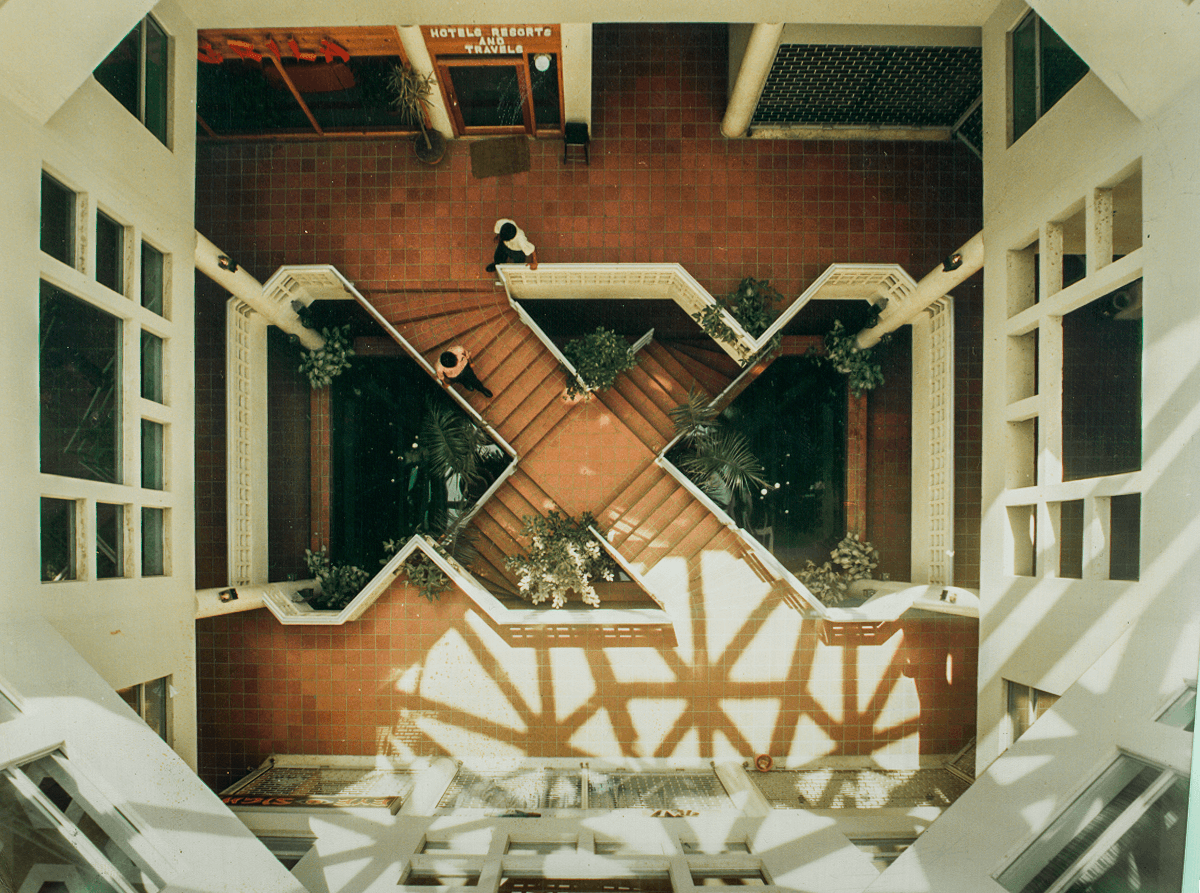
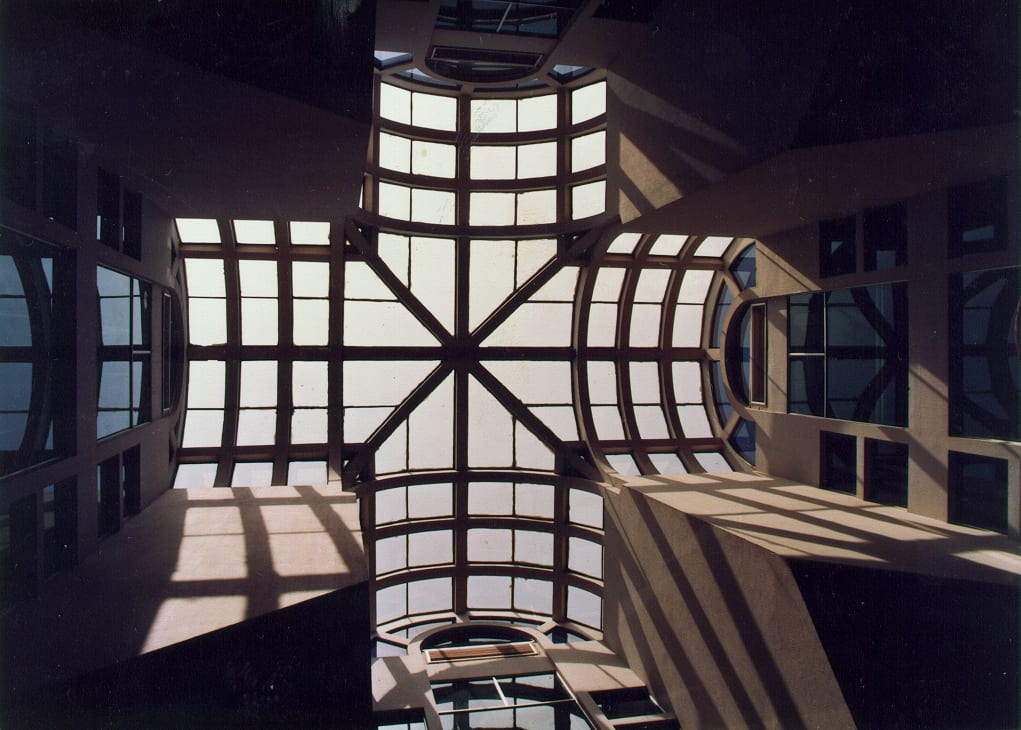
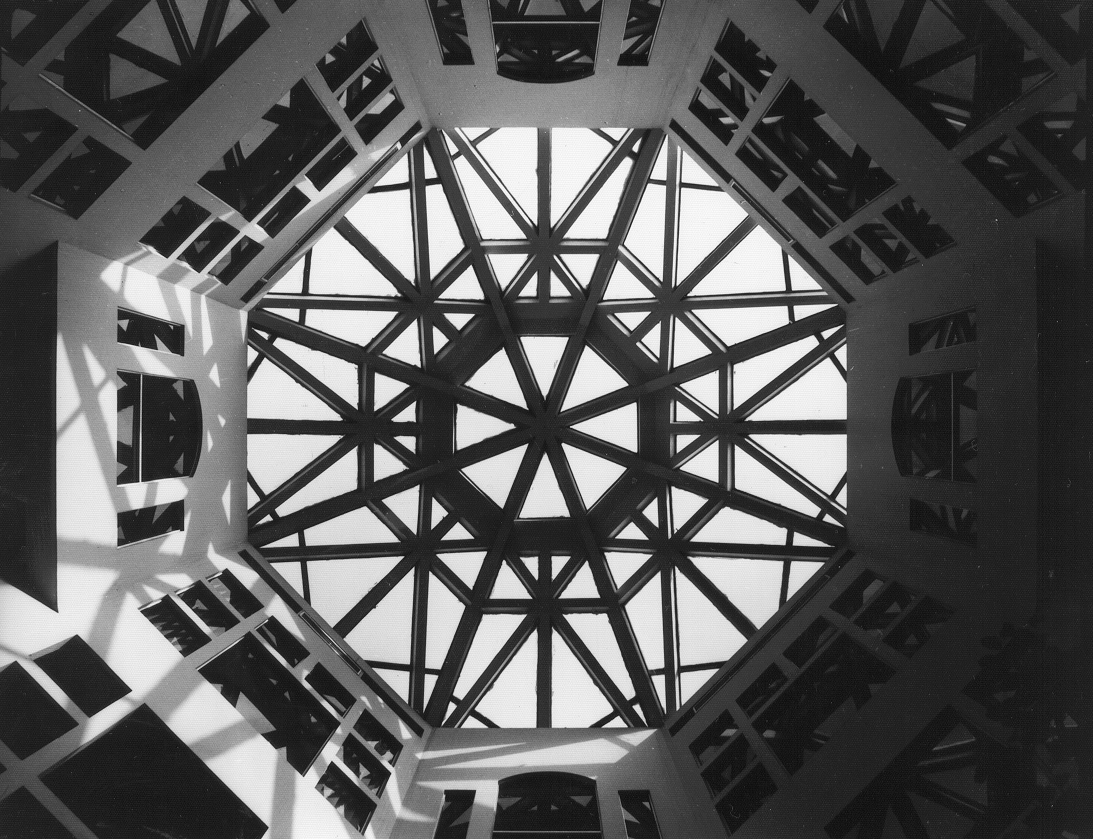
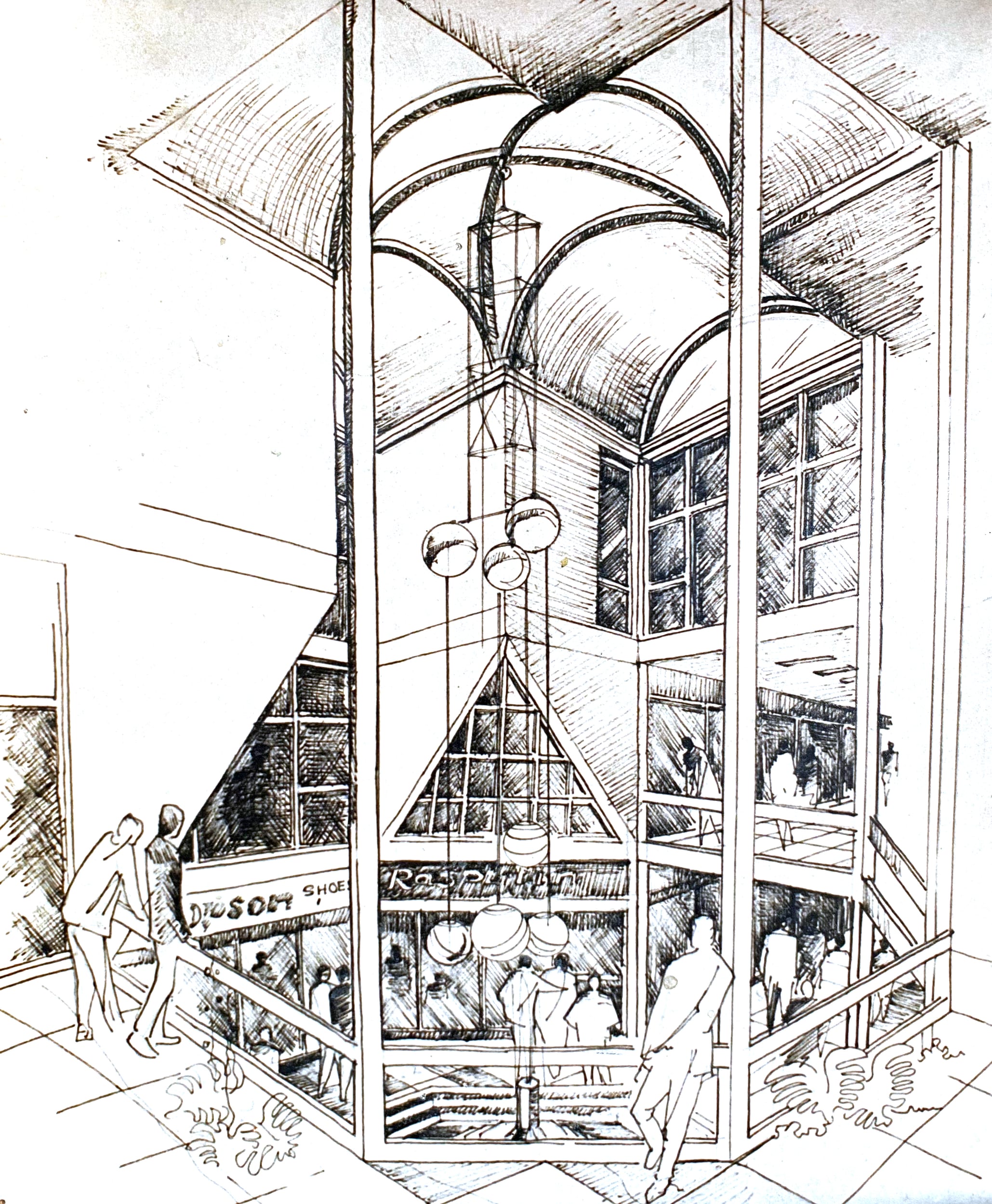
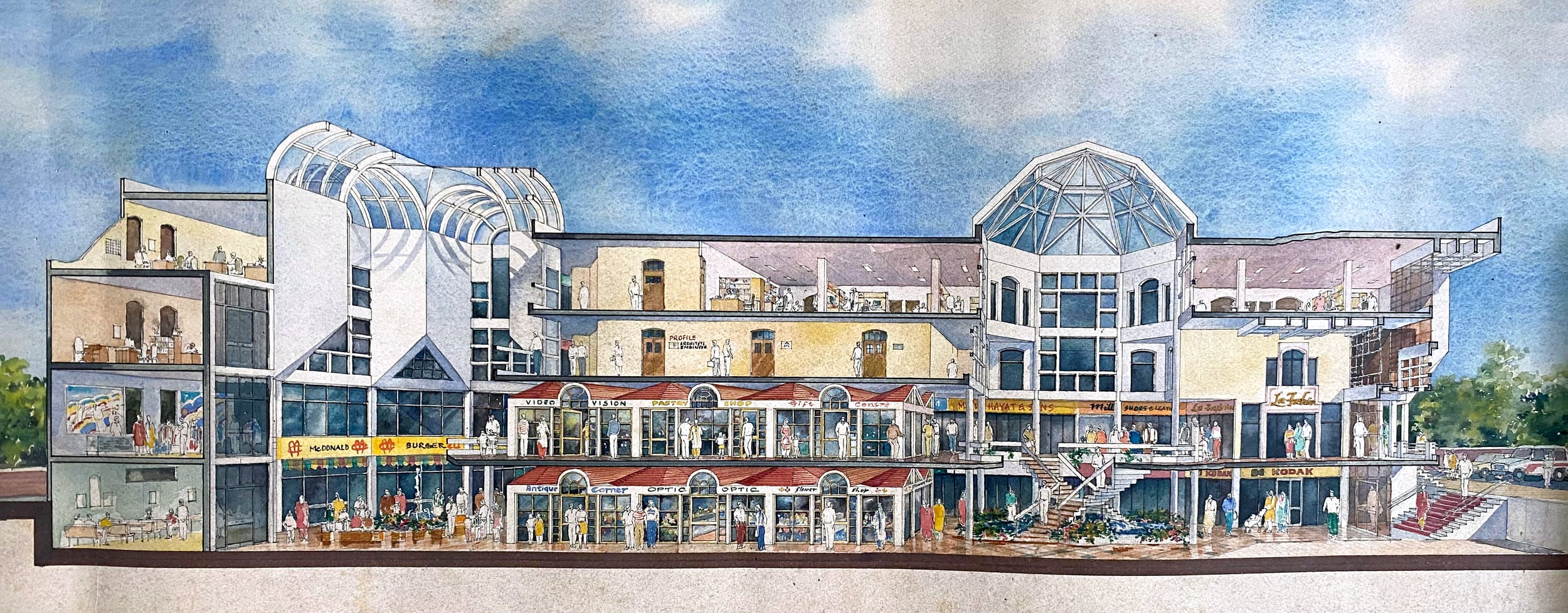
The building is organized around two large atriums, each functioning as a vertical hub of light and activity. These are connected by a series of elevated walkways that stitch together the upper floors, allowing visual continuity and spatial porosity across levels. The presence of generous skylights above both atria floods the interiors with natural light, softening the commercial environment and adding a sense of openness that was uncommon for malls at the time.
Conceptually, Empire Centre embraced the language of postmodernism, evident in its mix of classical references and geometric abstraction. Rather than rely on minimalism or a strictly modernist palette, the design played with surface articulation, symmetry, and historical motifs — placing it firmly within the postmodern discourse that was emerging in Pakistan during the late 1980s and early 1990s. This approach gave the building a distinctive civic presence, allowing it to stand apart from the glass-and-aluminum typologies that would dominate the decades to come.
One of the most significant validations of the project's architectural value came in the form of its inclusion in Kamil Khan Mumtaz's seminal publication on Architecture in Pakistan, where it was cited as a notable example of contemporary commercial design that engaged with both spatial innovation and local sensibility.
Empire Centre's impact lies not in scale or ornament, but in its early experimentation with internalized urbanism — creating a world within a world. By pulling activity inward and upward, the building offered a new way to think about public gathering, retail experience, and the role of architecture in shaping commercial life. Decades later, it remains a landmark not just for what it introduced, but for how confidently it did so.